
About HFI
Understanding Hereditary Fructose Intolerance
HFI is a rare inherited metabolic condition that affects the way the body processes certain sugars.

What is HFI?
Hereditary Fructose Intolerance (HFI) is an inherited condition caused by a deficiency of the enzyme Aldolase B, which is normally found in the liver, kidneys and small intestine. This means that someone with HFI is unable to metabolise fructose, sucrose or sorbitol. Someone with HFI is born with the condition.

A person with HFI is affected from birth, meaning their dietary needs must be addressed right away. Symptoms often appear during bottle feeding if the formula contains fructose. It usually shows up when a child is weaned off milk and onto solid foods like fruit, vegetables and other sweet foods.

Fructose, Sucrose and Sorbitol given to a child with HFI will result in a baby being very unsettled, frequently vomiting, crying or screaming. It's often mistakenly attributed to "colic".
Diarrhoea and gut pain are common. Ingestion of fructose, sucrose or sorbitol leads to low blood glucose causing pallor and drowsiness.

HFI is an inherited condition. It is a mutation of a recessive gene. This means that both parents will carry one mutation copy but will not have the condition themselves (unless one of them actually has HFI). If both parents are carriers, there is a 1 in 4 chance of a child having HFI.

It is estimated that 1 in 15,000 children will be born with HFI. As it is rare, the diagnosis is often missed. It is vital that health professionals are made aware of the condition and symptoms. Doctors are told that "If you hear hoofbeats, it's probably a horse". We say "If you hear hoofbeats, it could be a zebra".

What happens if HFI isn't recognised?
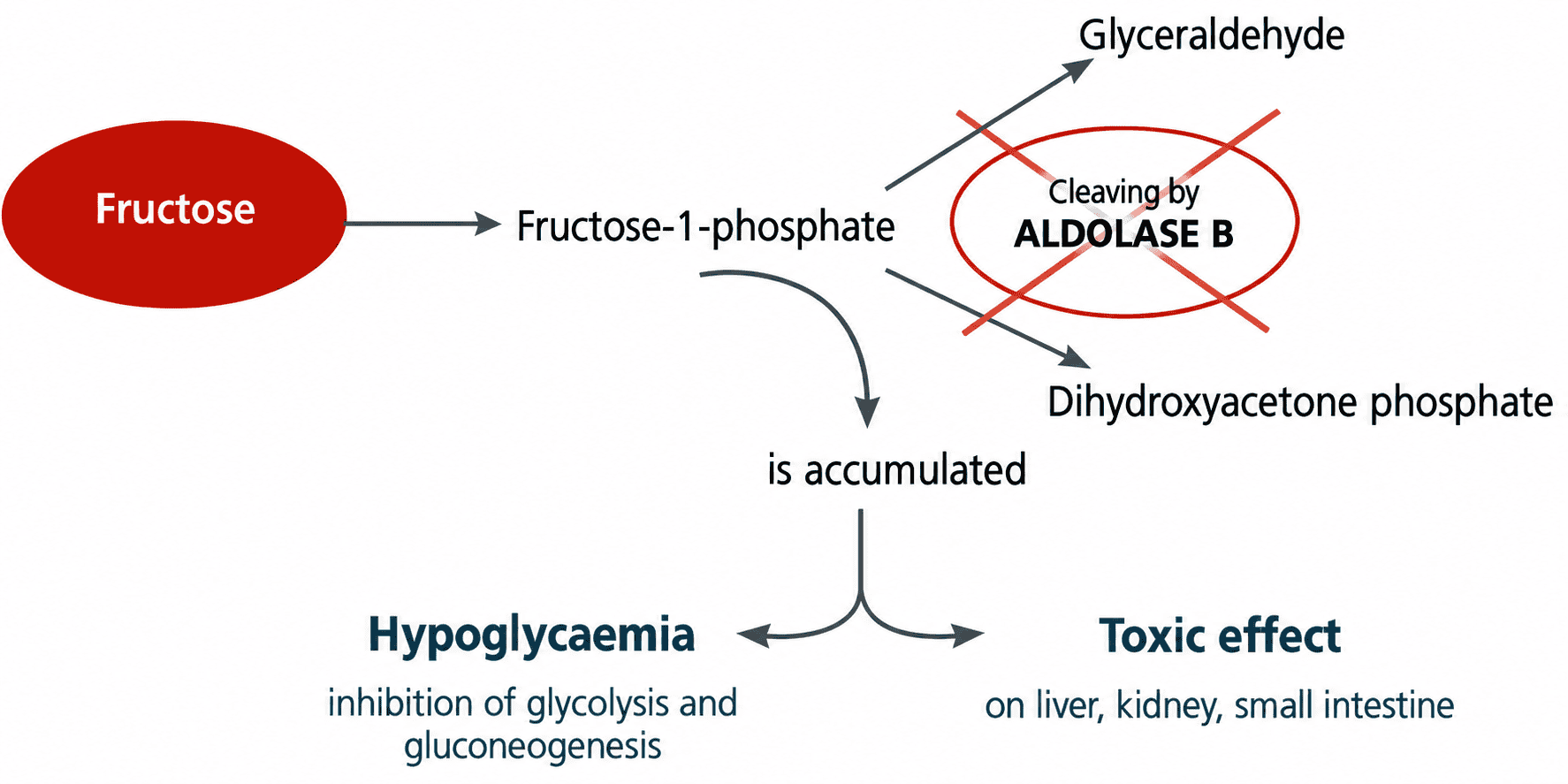
Ingestion of Fructose, Sucrose or Sorbitol causes hypoglycaemia - abnormally low blood glucose levels. A child may be classed as 'Failure to Thrive'. Accumulated fructose acts as a toxin/poison and causes potential lasting damage to the liver, kidney and small intestine. If not recognised, this can result in death.
What happens in the body when fructose is ingested?
Fructose is broken down in the liver, firstly by the enzyme Ketohexokinase, to Fructose-1-phosphate. Then Aldolase B splits this into Glyceraldehyde and Dihydroxyacetone phosphate. Without Aldolse B, this stage cannot happen, causing hypoglycaemia, and a toxic effect damaging the liver, kidneys and small intestine.
What happens if it's not recognised?
Most individuals with HFI develop a strong aversion to sweet tastes, which is potentially a lifesaving response.
Continuing to consume unsafe sugars will cause liver and kidney damage. HFI may be detected by dentists when treating adults who have no dental decay, as the absence of cavities can be an indicator of the condition.


How is HFI Treated?
There is no treatment as such, but someone with HFI can stay healthy and well as long as they stick to a diet free of Fructose, Sucrose and Sorbitol. This diet is our lifesaver, but is often misunderstood, even by dieticians. The normal "healthy" diet is poisonous for individuals with HFI. Eating out can be difficult!

Help us make a difference
Your support helps us provide information, resources and a community for people affected by Hereditary Fructose Intolerance.



© 2026 HFI UK All rights reserved.